The Journal · 8 November 2026
One price for each work, everywhere you sell it
By Marques Hardin, artist manager · Paris & Rome
Give each work one price and use it everywhere: in the studio, at the gallery, online and at a fair. When a buyer finds two prices for the same work, one of them looks fake. Galleries expect it, collectors notice it, and a price only moves for a reason you can write down.
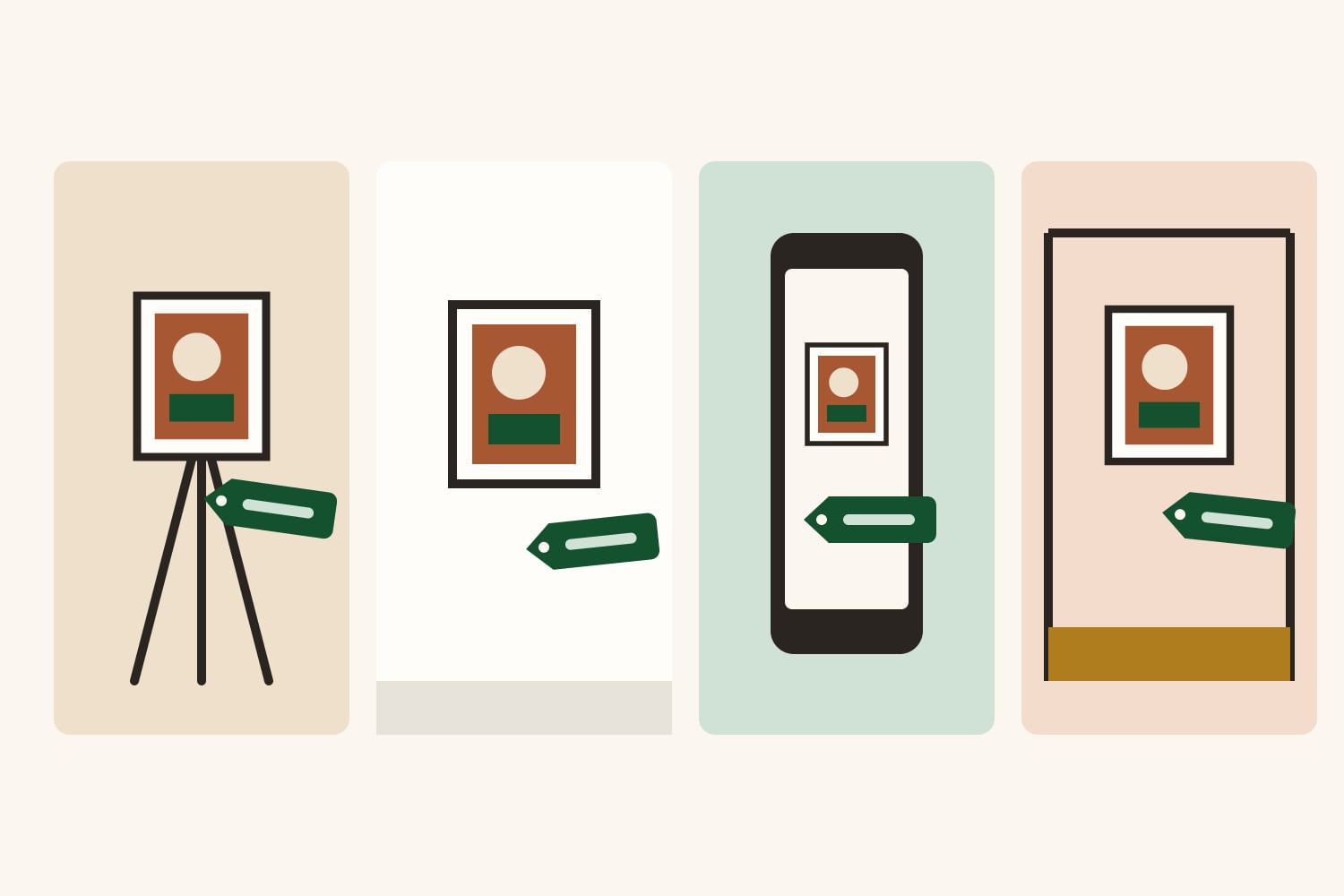
Why does one price matter?
Picture a collector who sees your painting at €3,000 on a gallery wall, then finds it at €2,200 on your website. They learn two things at once: one of those prices is not real, and you might go lower if they push a little.
Galleries feel it too. Artwork Archive puts it plainly: galleries expect 100% consistency, because nobody wants to be undersold by another venue (Artwork Archive). The European federation of gallery associations says the price in your studio must be the same as the price at your gallery (FEAGA).
What does one price mean in practice?
- The same work has the same price in the studio, at the gallery, online and at a fair.
- Works of the same size and medium sit at the same price. The author Caroll Michels says prices must be universally consistent (Artsy Shark).
- A price only moves for a reason you can write down, like new sales or a new year.
- The price belongs to the work. It does not change with who is selling it.
What do I say when a buyer says it is too expensive?
When someone tells me a work is too expensive, I hear that it is too expensive for them. That is about their budget, not about the value of the work. So I do not drop the price; I look for the buyer it fits.
I do not give discounts either. If a buyer wants one, they have to earn it, for example by bringing me another buyer. I will not undercut an artist or a gallery to win a collector.
This only works if you are not hungry, so set up your life in a way that lets you say no. The day you have to say yes to every offer, your prices start to slide, and so does the value of everything you make.
How do I raise a price the right way?
Raise it everywhere on the same day, and tell your galleries before the new price goes public. Never lower a price in one place just to make a quick sale. Michels warns that cutting prices hurts the people who already paid more, and "penalizes the very people who believed in you" (Artsy Shark).
Where does Artelier Business fit?
In Artelier Business each work has one record with its price. The suggested price is calculated from your own sales, and it never goes below the last price paid for a work of the same size, or below what the work cost you. You can read every line of how it was set, and the final number is always yours.
Why does a single price protect an artist's market?
A price is a public statement about a work, and collectors compare. When the same canvas carries one figure at a fair, another on the artist's website and a third in a private message, the buyer stops reading any of them as the price and starts reading them as an opening offer. The cost of that falls on everyone who sells the artist's work, and on every collector who already paid the higher figure.
Buyers have said as much. In Artsy's survey of more than 1,600 collectors and galleries, 60% of collectors said more transparency on prices would most improve their buying experience, while only 44% of galleries showed prices online for all works and a further 25% gave them only on request (Il Sole 24 Ore).
What do the professional codes say?
The guide of the Federation of European Art Galleries Associations is unusually direct. Gallery and artist together determine the selling price of each work, and the price is tied to the object rather than to the gallery or dealer, so that collectors are not confronted with different prices for a similar work. It adds that prices in the studio must equal the prices at the artist's gallery, and that a studio sale is treated in the same way as a sale through the gallery (FEAGA).
Best-practice guidance for artists in Alberta, Canada, says the same in fewer words: once prices are established they should remain established in all jurisdictions, and unacknowledged sales "out the studio door" inside an exclusive territory will always cause discord (Best Practices, Alberta).
Where do prices usually split?
- Studio sales: a lower figure for a friend or a direct buyer, which the gallery hears about later.
- Websites and marketplaces: a price list that was never updated after the last increase.
- Fairs: a work shown at one price online and at another on the stand, a risk Artlogic names directly (Artlogic).
- Regional pricing: lower prices for smaller cities, which Michels calls a source of inconsistency (Artsy Shark).
- Discounts given case by case, which Artlogic warns can create problems for the artist's wider market (Artlogic).
How should a discount work, if at all?
Practice varies. The model cooperation agreement attached to the FEAGA guide lets a gallery allow a discount of up to 15% without the artist's permission, shared equally between gallery and artist (FEAGA). My own view is stricter: I do not give discounts, and when a collector asks for one, it has to be traded for something of comparable value, such as a second buyer. A discount given for nothing teaches a collector that the published figure was never the real one.
Whatever rule a gallery and an artist choose, it belongs in writing, together with who carries the cost. Our article on consignment shows how the same discount can move the artist's share by €400 on a €4,000 work (consignment agreements).
How do you keep one price across every channel?
The practical answer is one record. Artlogic's advice to galleries is to keep one reliable pricing record rather than separate versions for each channel, and to make sure anyone speaking with a collector works from the same current record (Artlogic). Increases should follow a rule that the artist and the gallery agreed in advance, documented with the evidence that justifies them, and they should reach every channel on the same day.
In Artelier Business each work carries one price on its record. The suggested asking price comes from the artist's own sales of the last three years and verified record, it never falls below the last price paid for a same-size work or below what the work cost, and every line of the calculation is on the screen. The software does not set a price on its own: the final number is always the artist's, agreed with the gallery.
A fair price is one you would find anywhere the work is sold, and a few simple questions tell you whether that is true before you commit.
- Ask whether the price is the same at the gallery, in the studio and online.
- Look up the artist's website, because a price list that matches the gallery is a good sign of a careful artist.
- Ask how the price was set, since a serious artist or gallery can explain it line by line.
- If you would like a discount, offer something real in return, like a second purchase or an introduction to another collector.
- Keep the invoice, because it records the price you actually paid, which matters when the work is insured, donated or sold again.
Frequently asked questions
No. Gallery codes such as the FEAGA guide say studio prices should equal gallery prices, and a lower studio price undercuts the gallery and earlier buyers.
Sources
- FEAGA, New Guide for Art Galleries
- Best Practices: Exhibiting in a Commercial Gallery, Alberta
- Artwork Archive, Why it pays to price consistently
- Artsy Shark, What artists must know about pricing consistency, 2018
- Artlogic, How to price art, 27 August 2026
- Il Sole 24 Ore, Collectors demand transparency on prices, 28 April 2025