The Journal · 9 November 2026
The art world should be a collective. It still plays an individual game.
By Marques Hardin, artist manager · Paris & Rome
Artists, managers and galleries each pay their own costs and keep their own records, so each one takes a bad year alone. The 2026 numbers show dealers' costs rising faster than their sales while more collectors buy straight from artists. Sharing the cost of a show and working from one record of every work is how small teams get through it.

What happened in Vienna?
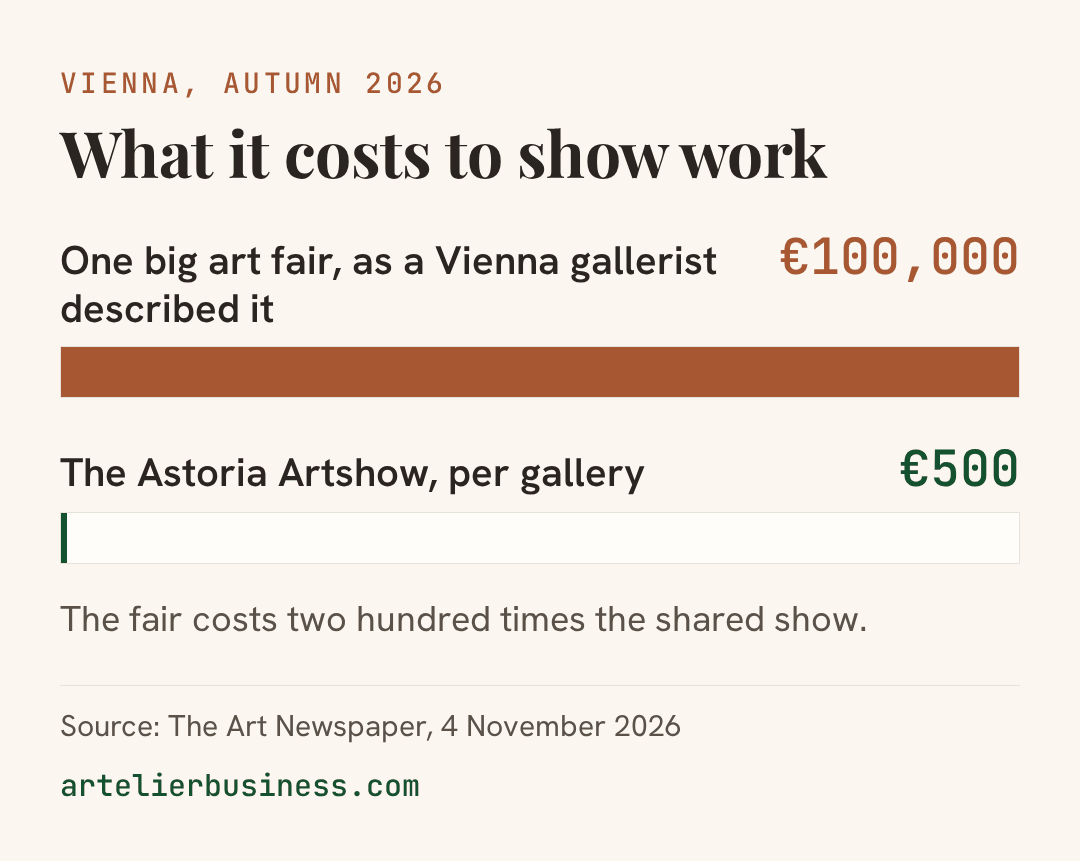
In November, The Art Newspaper reported that four galleries in Vienna had shut or were leaving the city. One gallerist said there were "simply no new collectors emerging." Another talked about a big art fair "taking another €100,000."
In the same city, a new show in an old garage asked each gallery for €500 to take part, and it drew a young crowd (The Art Newspaper). It will come back next year, and the fair bill was two hundred times larger.
Where do buyers go now?
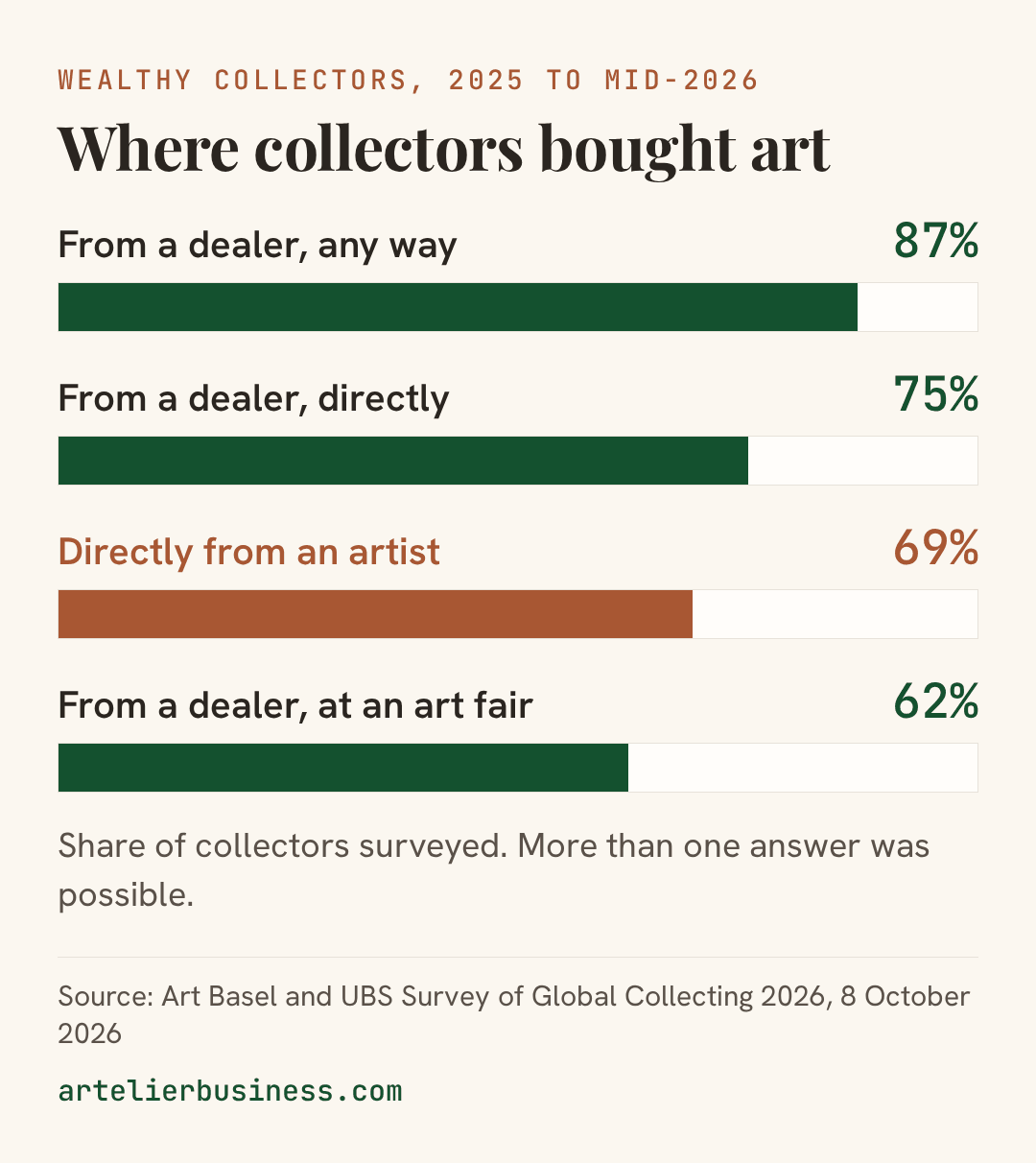
More and more, buyers come straight to you, and in the Art Basel and UBS survey of wealthy collectors, 69% said they had bought straight from an artist, more than twice as many as in 2024.
Most of them spend less than you might think: 77% spent under US$50,000 in the first half of 2026 (Art Basel and UBS). Those buyers ask careful questions, so have the answers ready before anyone asks.
Why does one record matter so much?
I manage artists in Paris through Artgence. I once kept three lists for the same work: one from the artist, one of my own and one from the gallery, and nobody could say which one was right.
The record protects the work too, since eight works I believed were stolen came back because the paperwork showed whose they were and where they had been. The record you keep protects your life's work.
What can you do this week?
- Write down every cost of your next show and who pays it, before you sign anything.
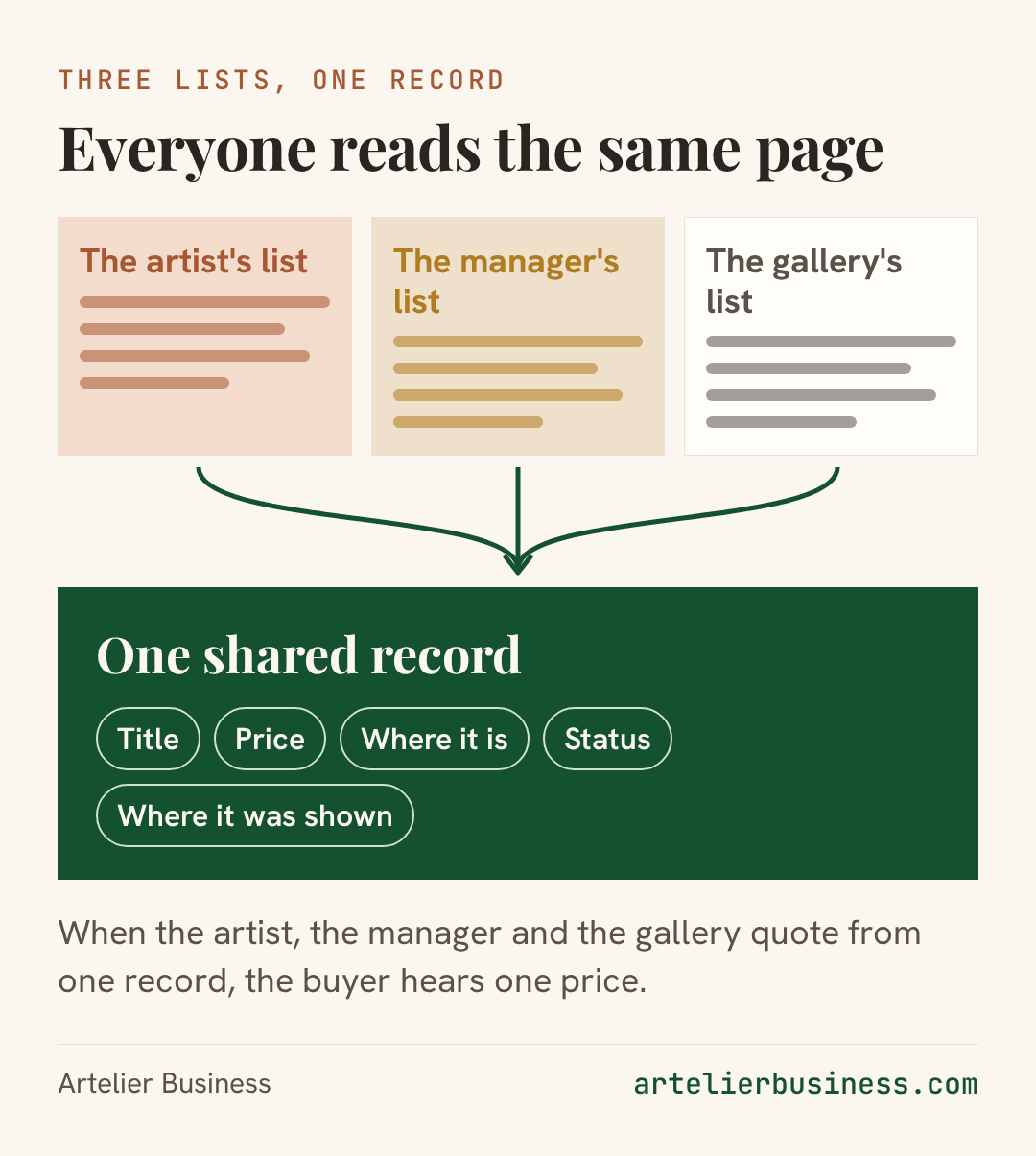
- Sit down with your gallery or your manager and agree on one list, with the title, price, place and status of each work.
- Pick one work and write down why it costs what it costs, using the last three years of your career.
- Call one artist or gallery about sharing a cost, like a booth, a shipping crate or a joint newsletter that every subscriber agreed to.
- Ask your last five buyers how they found you.
In my view the art world should be a collective, but it operates as an individual game. Each of these steps makes your corner of it a little less lonely.
Why does a bad year hit everyone separately?
I manage artists in Paris through Artgence, and whenever I read the market news I return to the same sentence. The art world should be a collective, but it operates as an individual game. Artists, managers and galleries mostly pay their own costs and keep their own records, which means that when the market tightens, each of them absorbs the loss alone.
On 4 November, The Art Newspaper reported that four galleries in Vienna had closed or were leaving the city, and the gallerists were candid about the reasons. One described the previous two years as "financially extremely challenging"; another observed that "there are simply no new collectors emerging"; a third described a major art fair "taking another €100,000" and the question it forced on him: "How much profit do I get? How much does the artist get?"
I will not judge those galleries, because I do not know their accounts, and I do not judge any career without the facts. The question still deserves an answer, and every artist and manager should be able to give that answer in writing before a single work is installed.
Why do the costs arrive before the first sale?
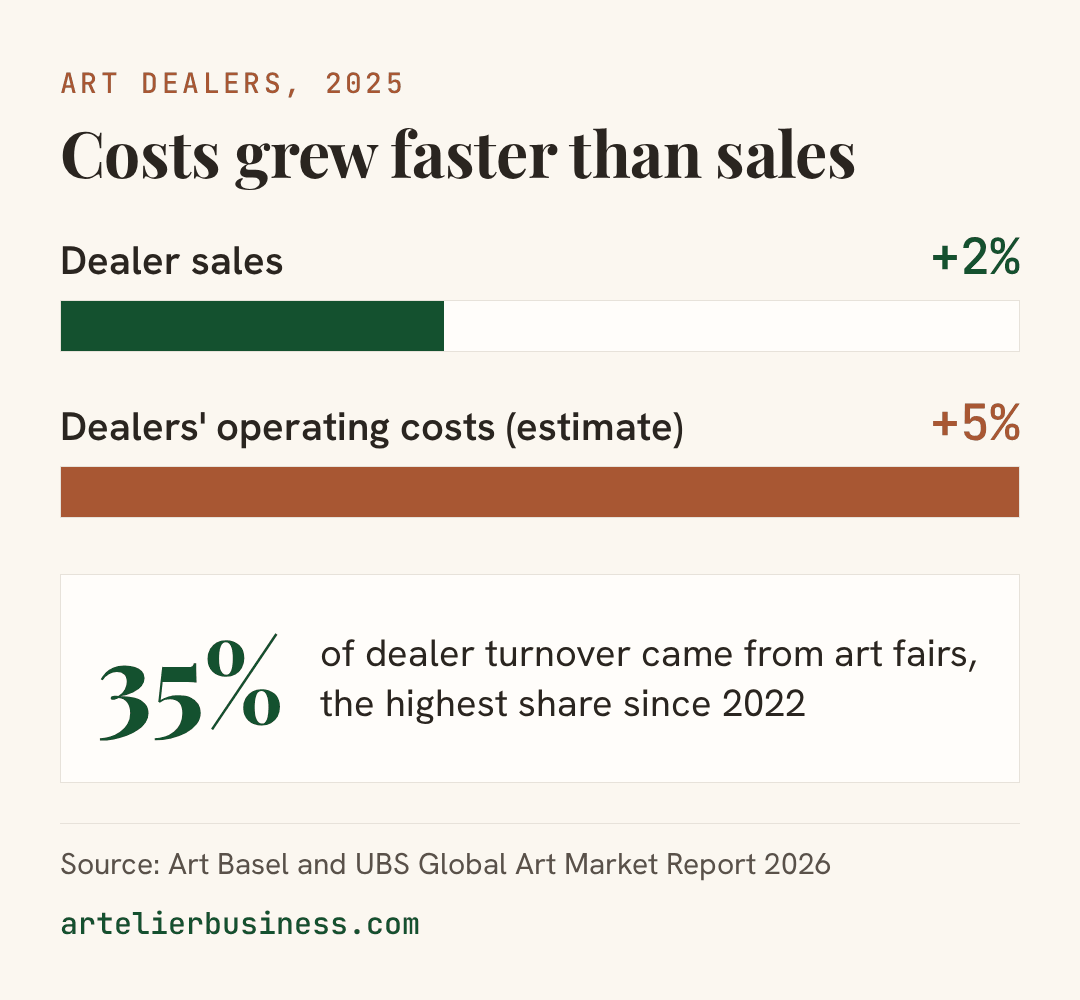
Rent, framing, shipping, insurance and the booth fee are all paid weeks before a buyer appears, and the sale may never materialise. According to the Art Basel and UBS Global Art Market Report 2026, dealer sales reached $34.8 billion in 2025, a rise of 2%, while dealers' total operating costs rose by an estimated 5% on average.
The same report found that art fairs accounted for 35% of dealer turnover in 2025, their highest share since 2022. Galleries are therefore relying more heavily on fairs at precisely the moment when their costs are growing faster than their sales.
My view is that the money spent on a fair booth could often bring more people into your own space through steady online marketing. When a gallery pays a six-figure bill for one week in an exhibition hall and returns with a handful of sales, the math is not mathing. Fairs that artists pay for themselves can test a market and bring sales and contacts, although in my experience they do not advance a career.
Where are collectors buying now?
Collectors are already showing where they prefer to buy, and in the Art Basel and UBS Survey of Global Collecting 2026, published on 8 October, 87% of the wealthy collectors surveyed had bought from a dealer, and 69% had bought directly from artists, a proportion that is more than double its 2024 level.
The same survey found that 77% of those collectors spent under US$50,000 in the first half of 2026, which places most of the activity well within reach of independent artists and small galleries.
I believe the backbone of this market is the middle and upper-middle-class buyer, and those buyers are comfortable visiting a studio, commissioning a work or sending a message on Instagram. In Vienna, one gallerist told The Art Newspaper that middle-income professionals have "less money around, so they are more careful." Careful buyers ask why a work costs what it costs, who made it, where it has been exhibited and what happens if something goes wrong.
Confidence in the trade remains limited, since Artsy's Art Market Trends 2025 report, based on more than 1,600 respondents in over 60 countries, found that only 17% of collectors say the market serves them well.
What does a collective look like in practice?
The Vienna report also carried a quieter story, describing how the Astoria Artshow opened in September in a garage founded in 1918, galleries paid €500 each to take part, the show drew a young crowd, and it will return next year (The Art Newspaper).
The major fairs are adjusting as well, since Frieze has removed its requirement that a gallery have a permanent physical space, beginning with Frieze Seoul this year, and a gallerist who works without one told The Art Newspaper that "a gallery can be wherever its people are" (The Art Newspaper).
None of this requires a grand movement, because in my experience a collective in the art business comes down to a few practical habits that any small team can adopt.
- Galleries partner around their email lists instead of leaving them unused. In Europe, any shared or sponsored newsletter requires each subscriber's consent first.
- Artists and galleries treat each other as partners rather than saviours. Galleries are understaffed, and an artist who arrives organised makes the partnership work.
- The 50/50 split is calculated after the shared costs of the show, such as stretching, framing and shipping, spread across the works sent. That is how I work, and the contract should also state who pays for frames and for the return of unsold work.
- Everyone involved works from the same record.
What happens when three people keep three lists?
I learned that last habit the hard way, having kept three lists for the same work, one from the artist, one of my own as manager and one from the gallery, and nobody could say which one was right. When three people in the same transaction hold three versions of the facts, every conversation begins with an argument about what is true instead of a plan to sell.
The record also protects the work itself, since eight artworks I believed were stolen came back because the paperwork showed whose they were and where they had been. The record you keep protects your life's work, and once that record is shared, it protects everyone else in the transaction as well.
A collector who hears a price should be able to see the reasoning behind it, including the CV, the galleries, the museum exhibitions, the residencies and, above all, the last three years of the artist's career. When the artist, the manager and the gallery quote from the same record, the buyer hears one price with one set of reasons.
What can you do this week?
- List every cost of your next exhibition or fair, with the name of the person who pays each one, and send it to your partner before anything is signed. If the fee exceeds the sales you can honestly expect, say so.
- Reconcile your inventory with your gallery's and your manager's, work by work, and agree on a single version of the title, price, location and status of each piece.
- Choose one work and write down why it costs what it costs, using the last three years of the artist's record. If you cannot explain the price, a buyer will not accept it either.
- Contact one peer about a shared cost, such as a shared booth, a shared shipping crate, a joint opening in a private home, or a joint newsletter with consent from both lists.
- Ask your last five buyers where they found you. If most of them came to you directly, redirect your marketing budget there before you sign another booth contract.
The Vienna gallerists named rising costs and missing new buyers as their reasons for closing or leaving. Those are business problems, and business problems become smaller when people share both the load and the facts. Know your value, and work with partners who read from the same page you do.
I built Artelier Business so that a record, a price and a career stage can be read by everyone involved, and there is a free account with no card.
Buying straight from an artist is now normal. In the Art Basel and UBS survey, 69% of wealthy collectors had bought directly from an artist. A few careful questions keep your purchase clean, wherever you decide to buy.
- Ask whether the price is the same at the gallery, in the studio and online.
- Ask how the price was set, since a serious artist or gallery can explain it line by line, using the last three years of the artist's career.
- Ask who keeps the record of the work, with its title, size, date and where it has been shown.
- Ask for a numbered invoice and a certificate that name the artist and the work.
When the artist and the gallery work from the same record, you get the same answers from both of them. That is one of the simplest signs that you are dealing with people who take their work seriously.
Frequently asked questions
The gallerists who spoke to The Art Newspaper named rising costs, expensive art fairs and too few new collectors. Across the trade, dealers' operating costs rose about 5% in 2025, faster than their 2% rise in sales.
Sources
- The Art Newspaper, Four galleries in Vienna shut shop, 4 November 2026
- Art Basel and UBS, The Global Art Market Report 2026
- Art Basel and UBS, Survey of Global Collecting 2026, 8 October 2026
- Artsy, Art Market Trends 2025
- The Art Newspaper, How gallerists operate without a permanent space, 16 October 2026